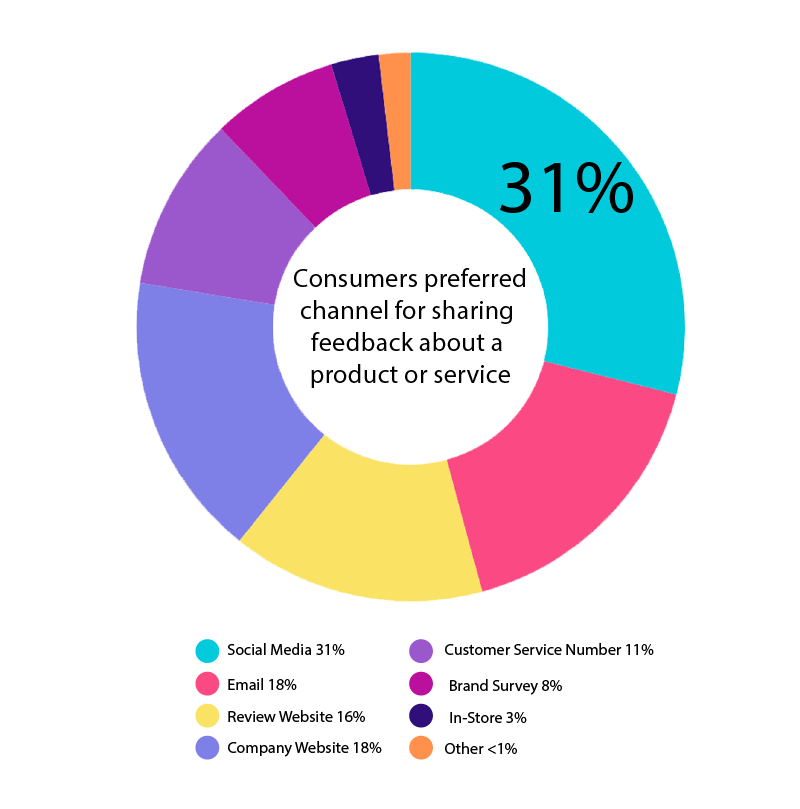
If you want to be more involved with your customers, you should take advantage of social media.
Building yourself a social media campaign can be daunting and time consuming. But if you want to increase brand awareness and reach out to new customers you need to consider using at least one social media platform.
With social media, you can build your community, listen to your customers, increase brand awareness and keep tabs on your competitors.
By defining your goals you can point to the specific steps you need to take. When you build your community you are encouraging conversations with your target audience and further building your relationship with them.
Tips on building a community
Leverage user-generated content
Be responsive, engage and don’t ignore comments
Focus on helping over selling
Create diverse content
Develop a consistent tone of voice
Tips on increasing brand awareness
Understand your Audience
Create Visual Content
Use Paid distribution
Track your performance
Create channel specific content
Tips on competitor analysis
Identify your main competitors
Analyse your competitors online presence
Analyse their business strategy
Where have other brands succeeded or failed?
Use 3rd party companies to gather metrics
Which platform is right for you?
By understanding what type of business you are, you can begin to refine your campaign.
Are you B2C or B2B?
B2C = Business to Consumer
A business that sells products and services directly to the consumer
B2B = Business to Business
A Business that sells products and services to solve problems for other businesses
While there are plenty of platforms to choose from, its best to know how they work so your choice is easier. By understanding the demographics for these platforms, you can fine tune your advertising to reach your ideal target market.
If you think of social media platforms as tools, below is a list of what they can do.
Facebook
Low cost adverts
Targeted ads
Supports various media types
Drive traffic to your website
Large user base (More potential customers)
Access to Meta Business Suite (Manage your metrics)
Paid adverts are cheaper than Google
Suitable for B2C more than B2B
Instagram
Focusses on visual style
Built in ad manager to track sales and potential leads.
Supports e-commerce profiles
Utilise user Generated content (Other users sharing your posts)
Shoppable posts (A post with the option to buy a product)
Access to Meta Business Suite (Manage your metrics)
Link websites and stores into your Bio
Suitable for B2B and also B2C
X (Formerly Twitter)
Stay up to date with industry news and trends
Build relationships with influencers and industry leaders
Drive traffic to your website or other socials
Use of @ tags encourage engagements
Best platform for showcasing your brand voice
Free use of Tweetdeck (customise and control your feed)
Influencers can boost your campaigns
Suitable for B2C more than B2B
Tik Tok
High user engagement (find a target market faster)
‘Stitch’ & ‘Duet’ allow for more involved user generated content
There are five main types of social media content, Videos, images, text, stories and live video. The content you create will influence your choice on choosing a social media platform.
Once you have decided on a platform, consider the type of content you would like to post and which platform will support it. For example, Tik Tok is a Video only platform where as Facebook can support videos, images and URLs to name a few.
Finally, consider your ability to create content, do you have a backlog of content readily available to upload to your new social media page, or have you got a team to manage the content?
Design, development and marketing for businesses that want to do more.
To provide the best experiences, we use technologies like cookies to store and/or access device information. Consenting to these technologies will allow us to process data such as browsing behavior or unique IDs on this site. Not consenting or withdrawing consent, may adversely affect certain features and functions.
Functional
Always active
The technical storage or access is strictly necessary for the legitimate purpose of enabling the use of a specific service explicitly requested by the subscriber or user, or for the sole purpose of carrying out the transmission of a communication over an electronic communications network.
Preferences
The technical storage or access is necessary for the legitimate purpose of storing preferences that are not requested by the subscriber or user.
Statistics
The technical storage or access that is used exclusively for statistical purposes.The technical storage or access that is used exclusively for anonymous statistical purposes. Without a subpoena, voluntary compliance on the part of your Internet Service Provider, or additional records from a third party, information stored or retrieved for this purpose alone cannot usually be used to identify you.
Marketing
The technical storage or access is required to create user profiles to send advertising, or to track the user on a website or across several websites for similar marketing purposes.